
Per-project relevance training
One of the fastest ways for a content tool to become useless is to stay generic.
You see it all the time. The feed starts with a few promising stories, then drifts into obvious headlines, weakly related pieces, and outright junk. The tool technically found content about your topic, but it never really learned what your newsletter considers worth covering.
That is the real frustration. Relevance is not universal. Two teams can both say they cover the same industry and still want completely different things from a shortlist.
Digest Engine is designed to adapt to that reality.
What per-project relevance training means
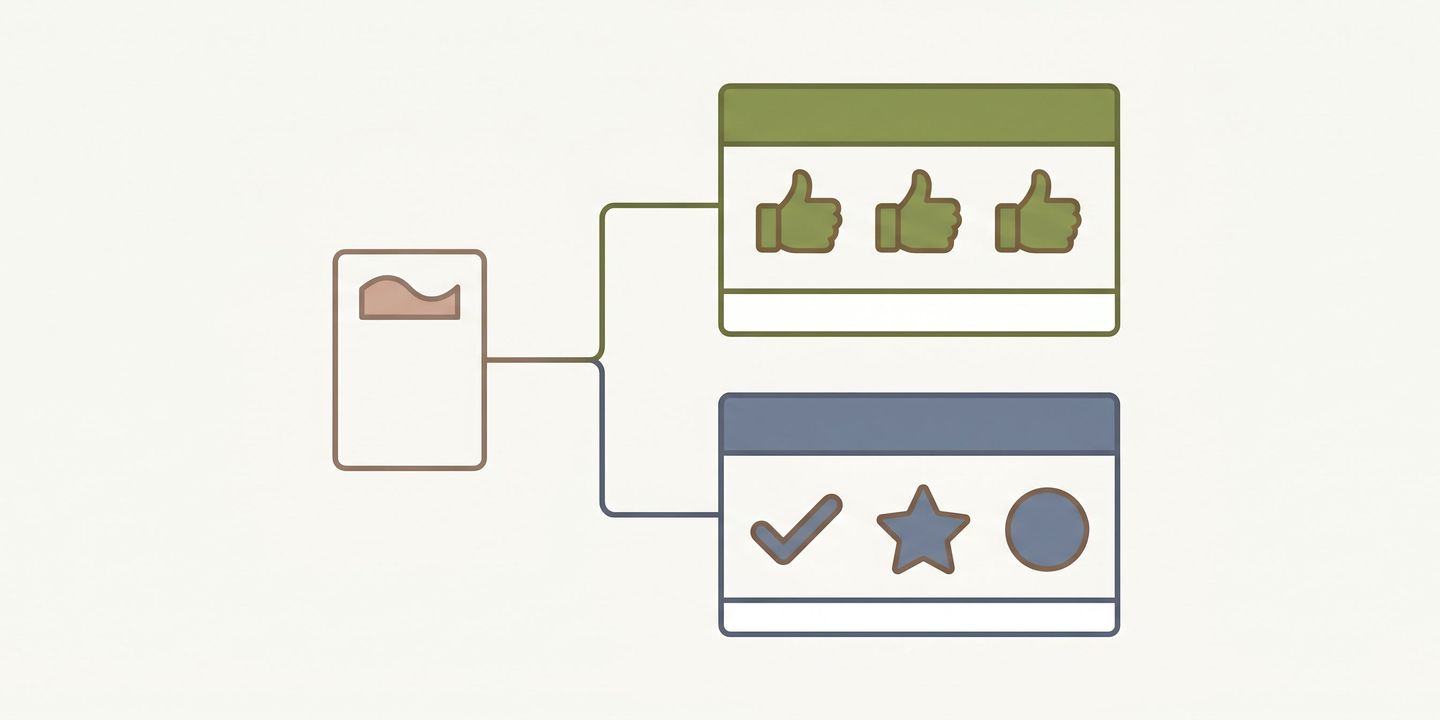
Per-project relevance training means each Digest Engine project gradually learns what belongs in that specific newsletter.
When you signal “more like this” or “less like this,” the system changes what is likely to rise in future shortlists. Over time, the feed starts to reflect the editorial choices you keep making instead of relying only on a generic first guess.
The important part is that this learning stays inside one project. If one newsletter in your organization cares about enterprise buying signals and another cares about research breakthroughs, those two projects can evolve in different directions without contaminating each other.
That project isolation is not a detail. It is the whole point.
The feedback loop is deliberately simple
You do not need prompt engineering to teach the system what better relevance looks like.
Digest Engine uses lightweight editorial feedback, including thumbs up and thumbs down on content, as part of the tuning loop. The same judgment you are already making while reviewing a queue becomes useful signal for what should surface next time.
That makes the workflow feel natural. You are not stepping out of the product to configure a model or fill out a long rules form. You are just curating the way you normally would, and the project gets sharper as a result.
For most editors, that is exactly the right level of effort: no extra ceremony, just clearer preferences captured in the moment.
What changes after a few rounds of use
The payoff is cumulative.
After a few rounds of feedback, weak-fit material starts to appear less often. The kinds of stories you consistently value rise faster. The shortlist feels less like a broad discovery engine and more like an editorial assistant that has begun to understand your standards.
This is especially noticeable after a week or two of steady use. You spend less time sorting obvious misses out of the queue and more time deciding what to do with the genuinely strong candidates.
That is a meaningful shift. It changes the product from something you constantly correct into something that increasingly saves you correction work.
A simple example
Imagine two newsletters that both say they cover AI.
One is written for operators and buyers inside large companies. It cares about enterprise adoption, procurement signals, workflow changes, and implementation lessons.
The other is written for readers who care about model releases, benchmarks, labs, and research direction.
Now imagine the same incoming story lands in both queues: a post about a new open model release with impressive technical claims but little evidence of practical adoption.
That story might be exactly right for the second project and mostly noise for the first. A generic discovery tool will often struggle to make that distinction consistently. A per-project system gets better at it because each newsletter’s feedback keeps pushing relevance toward its own editorial center of gravity.
That is what makes the same topic produce different shortlists for different projects.
Why this matters for marketers and newsletter authors
Marketers do not just need to know what is being talked about. They need to know what is useful for their audience.
Newsletter authors do not just need more links. They need a shortlist that becomes more precise over time so they can spend less energy filtering and more energy choosing, framing, and writing.
That is why per-project relevance training matters. The product is not learning abstract topic keywords alone. It is learning editorial preference inside a specific publishing context.
That makes the queue more actionable. And an actionable queue is what turns discovery into an issue.
Do you have to keep training it forever?
No.
You start with a reference set and then refine the project through normal use. Routine editorial feedback is enough to improve the shortlist over time.
This is an important distinction. Digest Engine does not expect you to become a model manager. It expects you to do what you already do as an editor: recognize a perfect fit, notice a weak fit, and signal the difference.
There is one sensible limit. If you fundamentally change what a newsletter is about, normal tuning will not instantly pivot the project into an entirely new category. But for day-to-day refinement, the feedback loop is designed to handle nuance without demanding constant babysitting.
Every project keeps its own taste
Everything in Digest Engine lives inside the boundaries of a single project, including the system’s understanding of relevance.
That matters because one team’s perfect source list may be another team’s noise. A product marketing newsletter, a cybersecurity briefing, and a founder-focused AI roundup should not all inherit the same idea of what belongs.
Digest Engine avoids that trap by keeping relevance scoped to the project. Each newsletter gets its own feedback history, its own reference context, and its own evolving standard for what qualifies as a strong match.
That is a much more realistic model of editorial work than pretending there is one global definition of relevance.
Why this is easier to trust
Per-project training is also easier to trust because the logic is understandable.
When content rises, it is not happening for mysterious reasons. The ranking is shaped by the reference material you started with and the feedback you have given since. You may not need the mathematical details, but you can understand the basic story: the system is responding to your project’s history, not improvising blind.
That kind of explainability matters. Editors are more willing to rely on a shortlist when they can see why it has become more aligned over time.
The takeaway
The more you use Digest Engine, the more the shortlist starts to reflect that project’s editorial instincts.
That leads to less filtering, better picks, and faster issue planning because the system is learning from the same judgments you already make while curating. No prompt engineering, no complicated retraining workflow, just a project that gets sharper as you use it.
For marketers and newsletter authors, that is the real benefit: not a generic relevance score, but a curation model that gradually learns what your specific publication means by “worth covering.”
And once that project-specific taste is in place, adjacent features like authority-aware ranking and draft assembly become much more useful because they are building on a shortlist that already understands your standards.