
Human review by default
The biggest risk with AI in publishing is not that it makes mistakes.
Every workflow makes mistakes. The real risk is when a system makes them confidently, invisibly, and too early for you to catch them.
That is how a weak recommendation slips into a shortlist, how a company name gets matched to the wrong thing, or how a forwarded newsletter gets parsed badly and quietly distorts the rest of the workflow. The problem is not just that the system was wrong. The problem is that nobody was asked to look.
Digest Engine is built around a different principle: when the system is uncertain, it should say so.
What “human review by default” means
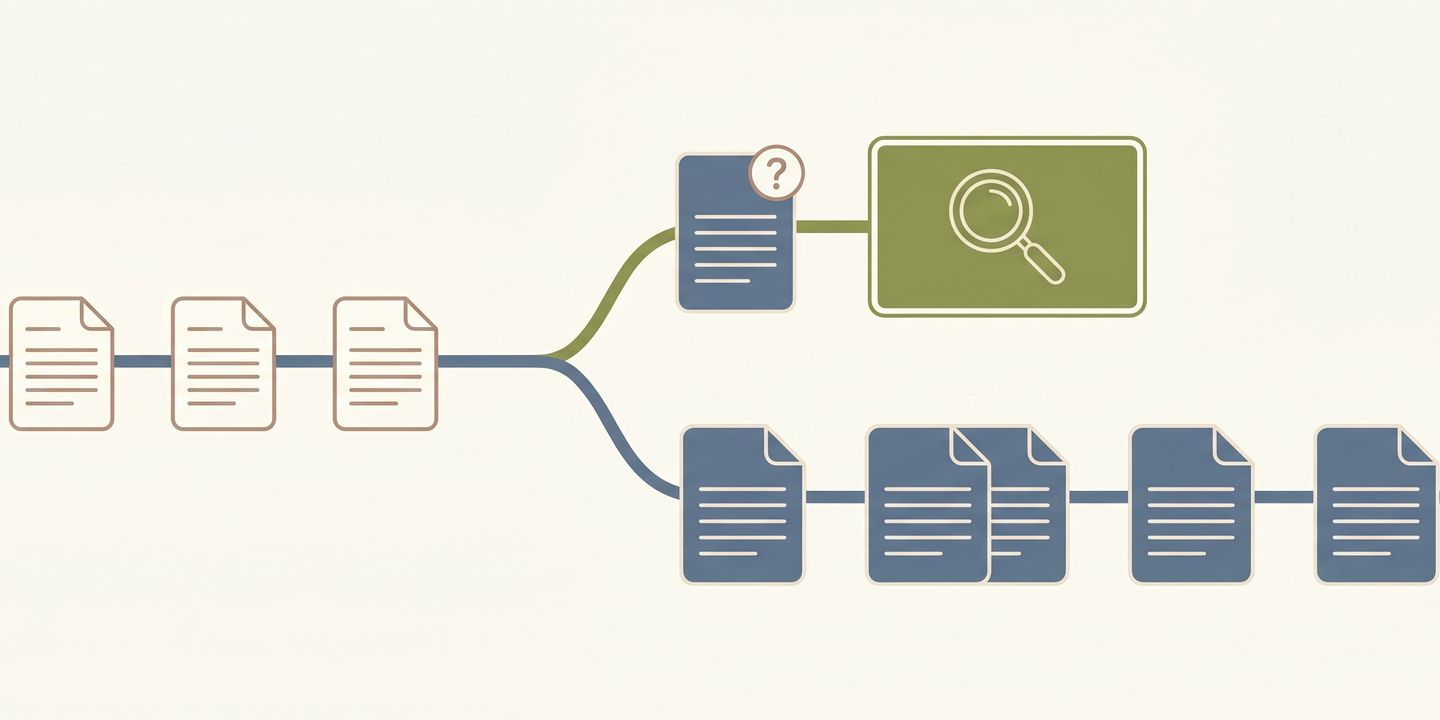
Human review by default means Digest Engine does not silently push uncertain cases through the pipeline, and it does not quietly drop them either.
Instead, those items are routed to a review queue where an editor can confirm, reject, or correct them.
That sounds simple, but it reflects an important product decision. The system is designed to ask for help at the right moments instead of pretending everything can be resolved automatically. In an editorial workflow, that is often the difference between a useful assistant and an unreliable one.
The goal is not to force editors to inspect every step. The goal is to surface the few cases where judgment actually matters.
What kinds of things go to review
Review is most valuable at the edges, where ambiguity is real.
That can include low-confidence classifications, borderline relevance decisions, ambiguous entity matches, unclear newsletter inputs, or possible duplicates that need a human call.
For example, when the system sees a proper noun it does not confidently recognize, it can create an entity candidate for human triage rather than auto-promoting it into your tracked entity set. In the review flow, you can approve it, reject it, or merge it into something you already track.
That is a much safer pattern than letting the system make a hidden guess that then affects authority signals, ranking, or draft assembly downstream.
Why this matters in editorial work
Marketers and newsletter authors are not just moving data through a pipe. They are publishing judgment.
A silent mistake can change what gets prioritized, how a source is interpreted, or which ideas make it into a draft. It can create irrelevant recommendations, incorrect attributions, or sections that feel off without immediately revealing why.
Human review protects the editorial bar by making uncertainty visible before it becomes output.
That matters not only for trust in the software, but for trust in the issue itself. Readers do not care whether an internal step failed elegantly. They care whether what you published was thoughtful, accurate, and worth their attention.
A realistic example
Imagine a forwarded newsletter comes into the system with messy formatting, broken spacing, or ambiguous links. Many AI-heavy products would simply guess at the structure, continue processing, and never tell you there was a problem.
Or imagine an article mentions a company name that could refer to two different organizations. A generic system might choose one, attach the wrong identity, and move on.
Digest Engine takes a different path. When the signal is weak or ambiguous, it can flag the item and route it to review. The editor can then decide what the content actually means before the mistake spreads deeper into the workflow.
That saves time in the place that matters most: before hidden errors become cleanup work.
Review is also how the system gets better
The review queue is not only a safety net. It is also part of how the project gets more aligned over time.
When you approve an entity candidate, dismiss something irrelevant, or give clear positive or negative feedback on content, that action becomes a durable signal attached to the project. Over time, those decisions help shape the system’s sense of what belongs, what does not, and where the boundaries of the project really are.
You do not need to think about this as “training” in a technical sense. The practical takeaway is simpler: every review helps the system make better calls on future runs.
That makes human review feel less like rework and more like responsible tuning.
Why this is better than seamless automation
Many AI tools optimize for feeling fast and frictionless. They want the workflow to look seamless, even if that means burying uncertainty and hoping the user never notices.
Digest Engine makes a different tradeoff. It is willing to be slower in the right places so the workflow is more reliable overall.
That usually ends up faster where it counts. Editors spend less time untangling downstream confusion because the uncertain edge cases were pulled forward instead of hidden.
In a publishing workflow, that is the right kind of speed: less cleanup, fewer surprises, and more confidence that the issue is built on solid decisions.
Visibility matters too
There is another benefit here that is easy to underestimate. Review makes the workflow more visible.
When something goes wrong, you can see that it happened. You can inspect the questionable step, correct it, and move on. The system is more auditable, more understandable, and more correctable than a workflow that simply outputs a result and hides all its uncertainty.
For editors, that translates into a simple feeling: you are not trapped inside the machine’s guess.
Doesn’t this just create more work?
Only for the cases that actually need judgment.
That is the whole point. Human review is not there to make you re-check everything. It is there to isolate the ambiguous cases so they do not turn into bigger problems later.
In practice, that often saves time. A quick decision in a review queue is usually much cheaper than discovering a hidden mistake after it has already distorted rankings, entity tracking, or a draft section.
The work does not disappear. It just shows up where it can still be handled cleanly.
The takeaway
Digest Engine automates the busywork while keeping humans in charge of the decisions that matter.
By routing uncertain items to a review queue instead of silently promoting or discarding them, the product protects editorial quality without pretending the AI is infallible. That leads to better rankings, cleaner drafts, stronger entity data, and more confidence in what finally gets published.
For marketers and newsletter authors, that is the real value: fewer invisible errors, more trustworthy workflow behavior, and a system that gets sharper as your review decisions accumulate.
And once those human corrections are feeding back into the project, related features like relevance training, authority-aware ranking, and composable AI skills become much more useful because they are grounded in explicit editorial judgment.