
Draft assembly, not just curation
Research is rarely the final bottleneck in a newsletter workflow.
More often, the hardest moment comes after the research is already done. You have a solid shortlist, a handful of promising ideas, maybe even a few summaries you trust. And then you open a blank draft and have to figure out how the whole issue should actually come together.
That is where momentum usually breaks.
Most tools stop at curation. They help you collect source material, maybe sort it, maybe rank it, and then they hand the rest back to you. The writing still begins from a blank page.
Digest Engine is built to help with the next step too.
From shortlist to structure
Digest Engine does not just gather strong source material. It helps assemble that material into a working draft.
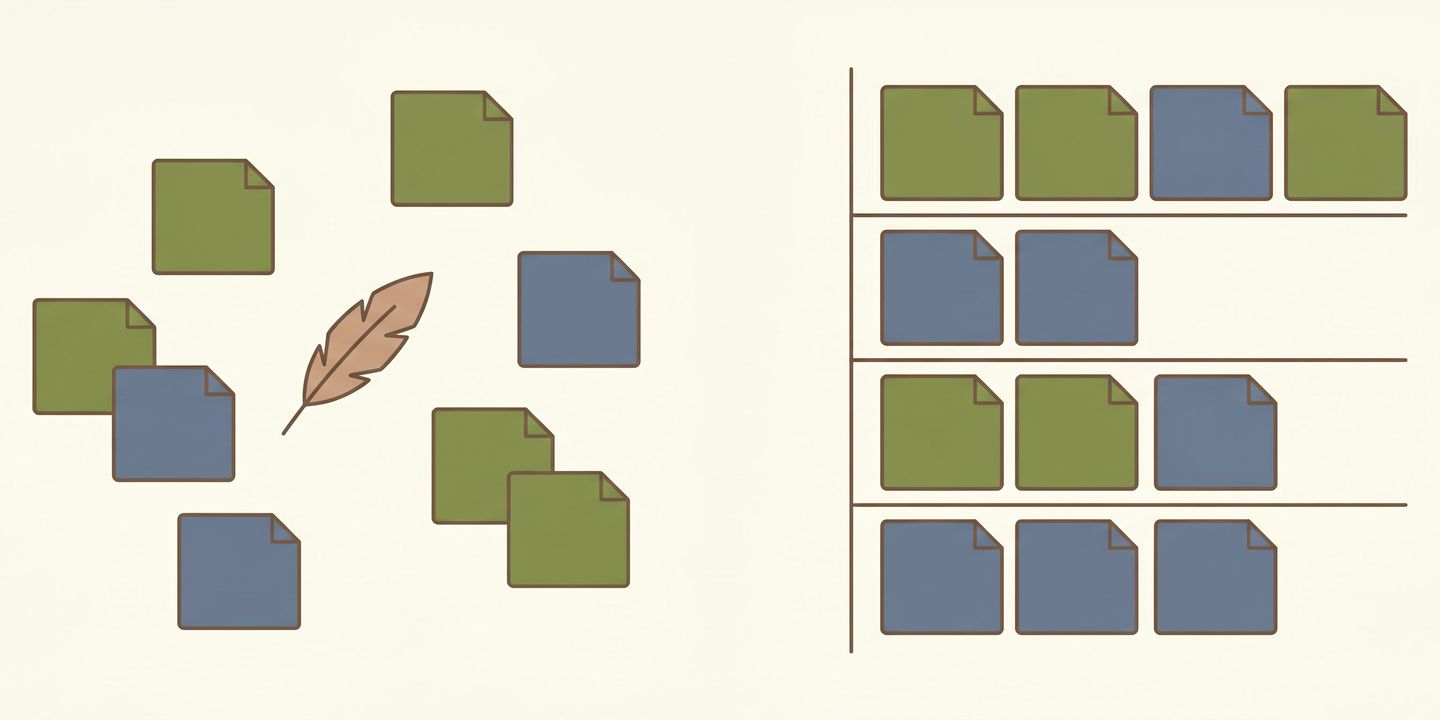
That does not mean it tries to write the newsletter for you. It means it helps turn the curation work you already did into something you can react to: sections, supporting items, summaries, and a rough structure that makes the issue feel real instead of hypothetical.
This is the key difference. The system is not inventing a disconnected newsletter from scratch. It is assembling a first draft from the research, ranking, and review decisions already happening inside the project.
For newsletter authors and marketers, that removes one of the most expensive forms of friction: figuring out how to begin.
Where the first draft comes from
The draft builder pulls from a few simple ingredients:
- high-relevance recent content
- promoted theme suggestions
- editor-generated original content ideas
That matters because the draft is grounded in your actual editorial workflow, not in a generic prompt asking an assistant to make something up.
If you promoted a theme because it reflects a real pattern in the week’s material, that theme can become a draft section. If a handful of articles earned their place in the shortlist, their summaries and supporting context can carry forward into the assembled draft. If you already know there is an original point you want to make, that can sit alongside the sourced material instead of being treated as an afterthought.
The result is a first draft that reflects the work you already approved.
What the draft actually looks like
The output is not just a pile of links dropped into a document.
Digest Engine helps organize the material into a proposed issue structure with sections that already have some internal logic. Theme suggestions can become assembled sections. Strong supporting items can slot underneath them. Summaries help the draft feel readable immediately instead of forcing you to reopen every source just to remember why you saved it.
That gives you something concrete to work with.
Instead of asking, “What do I even write first?” you can ask better questions: Which section should lead? Which two items belong together? What deserves more commentary? What should be cut? Where should the tone be sharpened?
Those are much better editing questions than a blank page can offer.
The writer still owns the newsletter
This part matters enough to state directly: Digest Engine is not trying to automate the writer out of the process.
The writer still decides framing, emphasis, sequencing, transitions, and final voice. The assembled draft is a starting point, not a substitute for authorship.
That is why controls matter. You can reorder sections, rework the structure, regenerate a section if it missed the point, and export the draft into the tools you already use. The workflow is designed to reduce startup friction, not force you into accepting generic copy.
If AI-generated writing makes you nervous because it often sounds flat or interchangeable, that instinct is correct. The value here is not automatic sameness. The value is a better first pass at organization.
A realistic example
Imagine a newsletter author has approved four strong articles for the week, promoted two emerging themes, and added one original note they want to make about the broader shift behind the headlines.
Without help, the next task is awkward. They still have to decide how to open, which items belong together, where the commentary should go, and how to build a coherent flow from all those pieces.
With draft assembly, the issue already begins to take shape. One promoted theme becomes the opening section. A second theme becomes a shorter follow-up section. The strongest supporting items sit underneath each section with summaries attached. The original note can become a framing or closing passage.
Now the work changes. Instead of starting from nothing, the author is refining something. They are choosing what should lead, tightening the angle, rewriting transitions, and making the piece sound like themselves.
That is a much faster path to a strong issue.
Why this matters for marketers and newsletter authors
Marketers often need to turn scattered source material into a clear point of view on a deadline. Newsletter authors need a repeatable way to move from collection to composition without every issue feeling like a cold start.
That transition is where consistency gets won or lost. You can have excellent curation and still ship unevenly if the drafting step remains too heavy.
Draft assembly helps solve that specific problem. It makes the move from research to composition more repeatable, which makes publishing more consistent.
And consistency matters. Readers do not just notice whether your picks are good. They notice whether the issue feels coherent.
Won’t this make every newsletter sound the same?
No, because the system is assembling from your project, your sources, your promoted themes, and your editorial feedback.
The writer still shapes the final piece. Voice, judgment, pacing, and emphasis stay human. The goal is not to standardize the writing. The goal is to make starting less painful.
That distinction is the entire point.
The draft is meant to be worked on
The first assembled draft is not the end of the process. It is a working document.
Sections can be edited, reordered, regenerated, and refined. Feedback on individual sections helps the system become more useful over time. And once the draft is in a strong place, it can be exported as raw Markdown or HTML for the publishing tools you already use.
That makes the workflow feel continuous rather than one-shot. You are not receiving a fixed artifact from the machine. You are developing a draft with better starting conditions.
There is another quiet benefit too: not every good item has to fit into the current issue. Leftover pieces can still inform future themes or later drafts, which means your curation work keeps paying off beyond a single send.
The takeaway
Digest Engine helps turn a curated shortlist into a usable issue draft faster.
That matters because the blank page is often the hardest part of the newsletter workflow, not the initial discovery step. By grouping related material into sections, carrying forward useful summaries, and assembling a structure you can immediately refine, the product removes friction without taking authorship away from the writer.
The result is simple: less time fighting the starting point, more time shaping the issue into something worth sending.
And once draft assembly is in place, related features like composable AI skills, relevance training, and human review become more powerful because they are all feeding into a workflow that actually ends in a publishable draft.